Brain Injuries in Cycling Accidents and Falls: What Happens Inside Your Head and What It Can Lead To
Share
Head injuries are among the most serious consequences of cycling accidents and falls. The head is one of the most frequently injured parts of the body in bike crashes, and head injuries are the leading cause of death and permanent disability. In this article, we explain what happens inside the brain during a fall, what types of brain injury there are and what effects they can have.
1. How the brain sits inside your head
The brain is a soft organ, about as firm as jelly. In adults it weighs roughly 1.3 to 1.4 kg and sits inside the skull, surrounded by cerebrospinal fluid (CSF). This fluid cushions the small jolts of everyday life.
In a fall, however, your head comes to a stop in a split second. The skull stops moving, but the brain keeps going because of inertia and hits the inside of the skull. Often it then bounces back and hits the opposite side as well. Doctors call this a coup-contrecoup injury (impact and counter-impact injury).
2. Two types of force: straight and rotational
- Linear forces occur when the head hits something straight on. They mainly cause broken bones (skull fracture) and bruising at the point of impact.
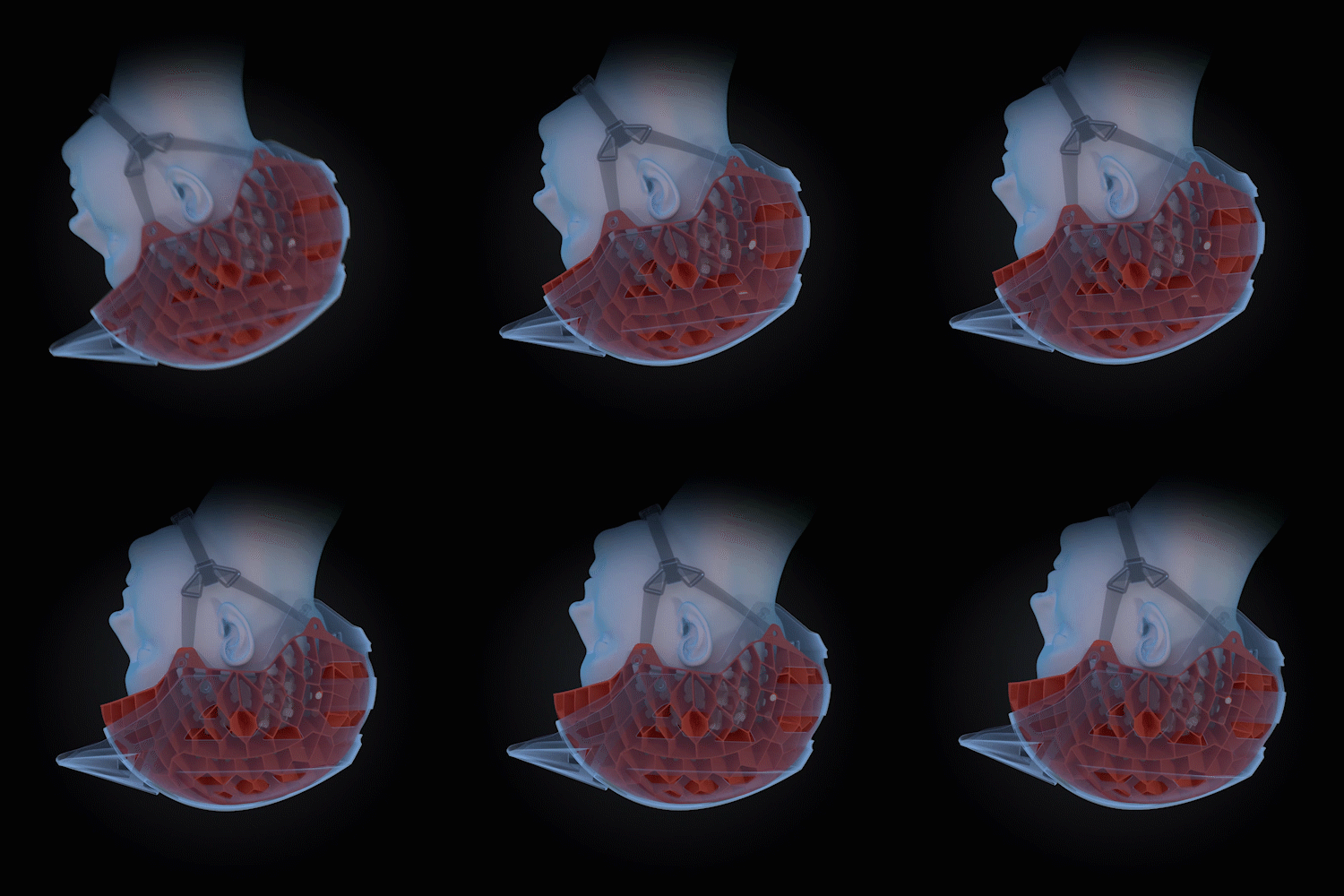
- Rotational forces occur when the head is suddenly twisted on impact, for example when hitting the ground at an angle. The brain gets twisted and sheared, meaning it's pulled out of shape so that different layers slide against each other. Research shows that these shear forces in particular are a major cause of concussion and of damage to nerve fibres and blood vessels.
Important: the skull can stay completely intact in a fall while the brain is injured by rotational forces.
3. Skull fracture and brain injury: not the same thing
A skull fracture is a break in the bone of the skull. It's a sign of a very powerful impact and can be dangerous, for example if pieces of bone are pushed inwards or blood vessels are damaged. That said, many simple skull fractures heal well.
A traumatic brain injury (TBI), on the other hand, describes an injury to the brain itself. It can happen with or without a fracture. Doctors roughly divide it into three levels of severity:
- Mild (grade I TBI), usually referred to as concussion
- Moderate (grade II)
- Severe (grade III), often with prolonged unconsciousness and a high risk of permanent damage
4. The main types of brain injury
Concussion (commotio cerebri)
The most common brain injury. The brain gets shaken and the nerve cells are thrown "out of sync". X-rays or CT scans often show nothing. Typical signs: headache, dizziness, nausea, brief loss of consciousness or memory gaps, sensitivity to light, feeling "foggy".
Cerebral contusion (contusio cerebri)
Here the brain tissue itself is damaged, causing small bleeds and swelling, often at the point of impact and on the opposite side.
Brain bleeds
- Epidural haematoma: bleeding between the skull and the tough outer membrane of the brain (dura mater), often after a skull fracture. The tricky part: people may feel fine at first and then get much worse within hours.
- Subdural haematoma: bleeding beneath the dura mater. It's often caused by rotational forces that tear the small "bridging veins" between the brain and its membrane.
Diffuse axonal injury (DAI)
The brain is made up of billions of nerve cells connected by long fibres (axons), like cables in a huge network. Strong rotational forces can overstretch or tear these cables, in many places at once. This injury is often hard to spot on scans but can have severe and long-lasting effects.
5. Warning signs after a fall
After any fall where you hit your head: better to get checked by a doctor once too often than once too little. Call emergency services (112) immediately if you notice:
- loss of consciousness, even briefly
- worsening headache, repeated vomiting
- confusion, unusual drowsiness, difficulty staying awake
- pupils of different sizes, vision problems
- numbness or weakness in the arms or legs, problems speaking
- seizures
- clear fluid or blood coming from the nose or ears
Even if you feel fine: if a concussion is suspected, don't ride on or do any sport that day, and get examined by a doctor.
6. Possible effects: short-term and long-term
Most mild concussions clear up with rest within a few days to a few weeks. For some people, however, symptoms last longer.
Short-term
- headache, dizziness, tiredness
- problems with concentration and memory (school, work)
- irritability, mood swings, sleep problems
Longer-term
- Post-concussion syndrome: symptoms that last for weeks or months
- lasting problems with memory, attention and planning
- personality changes, depression, anxiety disorders
- epilepsy (seizures) after severe injuries
- after severe TBI: paralysis, speech disorders, needing long-term care
The risk of repeat injuries
A brain that hasn't fully recovered yet is more vulnerable. A second injury shortly after the first can have especially serious consequences (second impact syndrome, described mainly in teenagers). Repeated head injuries over the years have also been linked to long-term brain diseases such as chronic traumatic encephalopathy (CTE).
7. Why teenagers need to be especially careful
The brain keeps developing until about your mid-twenties. In children and teenagers, recovery from a concussion often takes longer than in adults. That makes a good helmet, a medical check-up after every fall involving the head, and a complete break before getting back on the bike or playing sport all the more important.
8. What protects you?
Studies clearly show that wearing a bike helmet significantly reduces the risk of head injury. A large review (Olivier & Creighton, 2017) found that helmet wearers had roughly half the risk of head injury and around a two-thirds lower risk of serious and fatal head injuries.
Because many brain injuries are caused by rotational forces and not just straight impacts, research is increasingly focusing on helmets that also reduce rotational energy. How 720 does this with HexaGo® is explained in our article "HexaGo® vs. Classic Helmet: How a Helmet Protects Your Brain, Not Just Your Skull".
Note: This article is customer information from 720 Protections, not a medical text. It is for general information only and does not replace medical advice, diagnosis or treatment. If you have a head injury, always consult a medical professional.