Skull Intact, Brain Injured: Why a Helmet Has to Do More Than "Not Break"
Share
Picture this: you come off your bike, your helmet cracks, and your head looks totally fine. No fracture, no blood. Lucky escape? Not necessarily. Because the most dangerous damage is often the kind you can't see: the damage inside your brain.
The big myth: "As long as the skull doesn't break"
Lots of people think a helmet has done its job if the skull stays in one piece. For decades, that's exactly what classic helmets made of hard foam (EPS) were optimised for: absorbing a hard hit from above so the bone doesn't break.
The problem: your skull is just the packaging. What really matters is inside.
Think of a raw egg in a plastic box. Drop the box and the box might survive, but the egg inside can still be smashed. Your head works the same way: your brain floats inside your skull and slams against the inner wall when you crash, even if the bone on the outside stays completely intact.
Skull fracture vs. brain injury: the difference that changes everything
- Skull fracture = the bone breaks. It looks dramatic and it's serious, but in many cases it heals like any other broken bone.
- Brain injury (e.g. concussion, bleeding, nerve fibre damage) = the brain itself gets hurt. This often happens without a single broken bone and can change your concentration, memory, mood and personality, sometimes for good.
Remember: A skull can heal. An injured brain often recovers slowly, and sometimes never fully.
The invisible enemy: rotational forces
In real crashes, you almost never land straight on top of your head. You fall at an angle, slide, tumble. Your head isn't just stopped, it's also violently twisted. These rotational forces are especially dangerous for the brain: it gets twisted and stretched inside the skull, and delicate nerve pathways and blood vessels can tear.
Classic helmet standards mainly test straight-on impacts. So a helmet can pass the standard and still do little against the forces that hurt your brain the most.
Why the classic foam helmet hits its limits
- Hard and rigid: EPS is good at spreading a hard hit so the bone holds. But hard materials often pass energy on to your head too quickly.
- Single use only: Foam gets permanently crushed on impact. If your head gets hit a second time in the same spot, say when you roll over, there's hardly any protection left.
- Rotational forces: Without extra systems, a rigid shell can barely absorb rotation.
The answer: HexaGo®, built for your brain
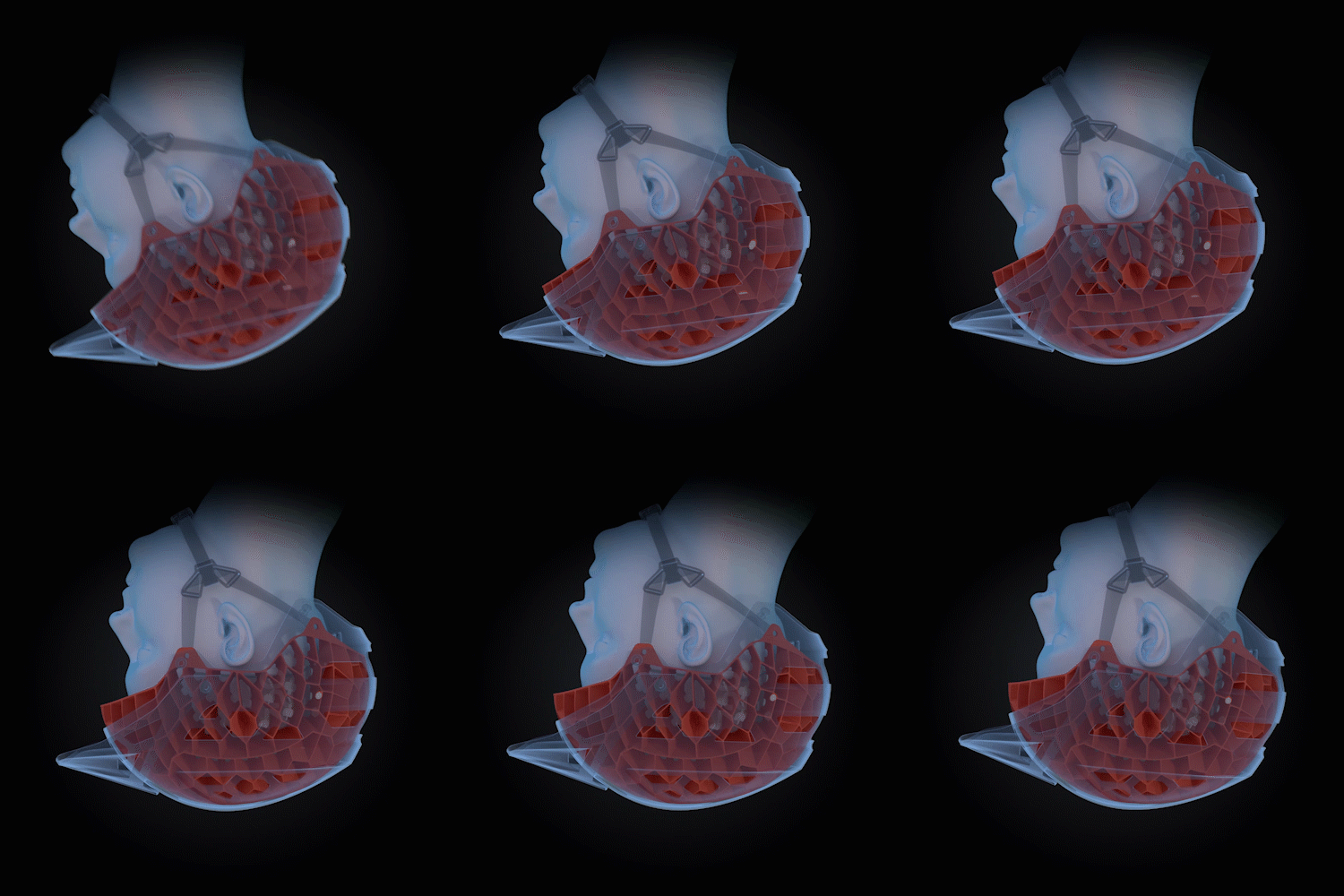
At 720, we rethought the helmet from the inside out. The heart of every 720 helmet is HexaGo®, a patented honeycomb core made of H.E.A.P. (High Energy Absorption Polymer).
- 🟫 A honeycomb that gives way: The cells deform in a controlled way and slow the impact down before it reaches your head.
- 🔄 Built-in protection against rotational forces: The core can slide inside the shell and move with your head. That slows down dangerous rotation, with no add-on liners needed.
- ♻️ Shape recovery: After an impact, the structure springs back into shape and still works if you take a second hit in the same crash.
- 🛡️ Tough outer shell: Polycarbonate (AWAKE) or PRP polymer (CIRCLE) protects against sharp objects and penetration.
The numbers speak for themselves
The European standard EN 1078 allows up to 250 g of impact force to reach the head.
- Average helmet: approx. 171 g (according to Folksam data)
- 720 helmet with HexaGo®: just 111 g (in lab tests)
That means: more than twice the protection the standard requires, and far less force reaching your brain. It also earned us the Red Dot Award 2020. Developed and manufactured in Europe, Made in Italy.
You only get one brain
A helmet isn't an accessory. It's the only thing standing between the asphalt and your brain when you crash. Next time you buy a helmet, don't just ask "Will my skull break?" Ask the real question: "How much reaches my brain?"
→ Discover 720 helmets with HexaGo® now | More about the technology